Missing & Murdered Indigenous Persons
About MMIP
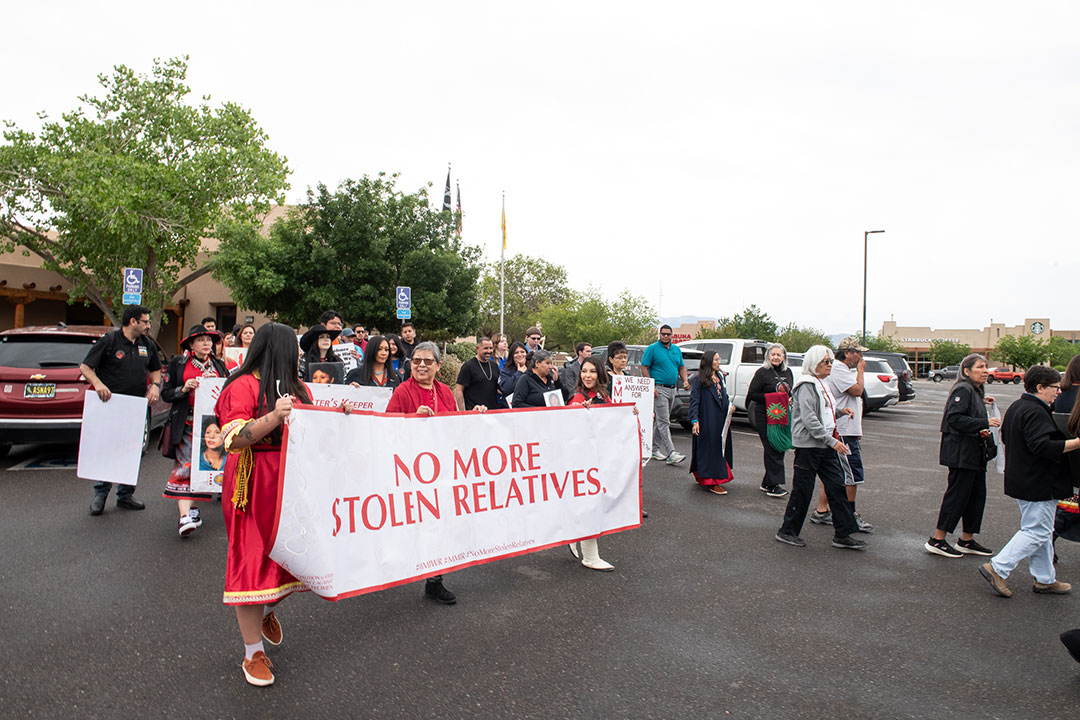
The Missing and Murdered Indigenous Persons (MMIP) crisis refers to the disproportionately high rates of violence experienced by Indigenous Peoples, compounded by a persistent lack of accurate data on missing and murdered Indigenous individuals. This crisis affects Indigenous communities both on and off tribal lands, and elevated rates of MMIP cases are also documented in urban areas.
The New Mexico Indian Affairs Department (IAD) is committed to addressing this crisis statewide and ensuring that MMIP issues remain a visible, ongoing priority for the state.
State Action on MMIP
New Mexico's formal response to the MMIP crisis began after data revealed alarmingly high rates of missing and murdered Indigenous persons across the state. In response, the New Mexico Legislature and Governor Michelle Lujan Grisham have taken the following actions:
2019 — House Bill 278
Governor Lujan Grisham signed House Bill 278 (PDF), establishing the Missing and Murdered Indigenous Persons Advisory Council Act. This created a dedicated advisory council to study the scope of the MMIP crisis in New Mexico and recommend solutions.
May 5, 2021 — Executive Order 2021-013
Governor Lujan Grisham signed Executive Order 2021-013 (PDF), extending the work of the MMIP Advisory Council. The council's continued efforts resulted in the development of the MMIP State Response Plan, a roadmap for coordinated state action on MMIP issues.
2022 — Senate Bill 13
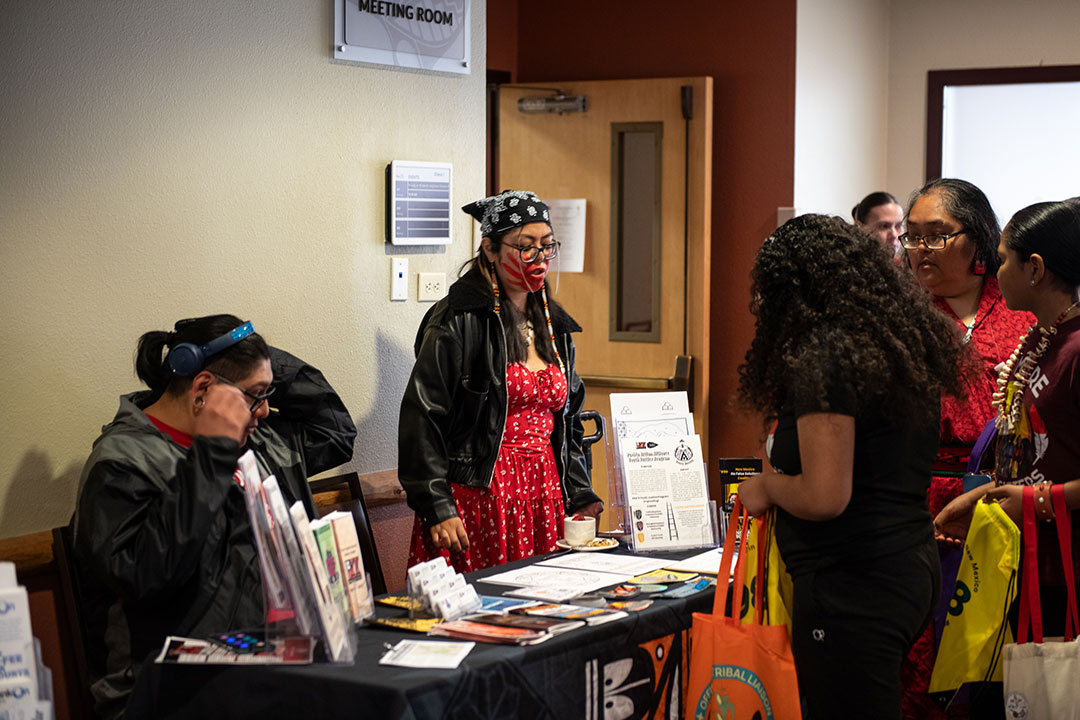
The New Mexico Legislature approved Senate Bill 13 (PDF), establishing Missing in New Mexico Day. This day supports all New Mexicans searching for missing relatives, providing a dedicated opportunity for families to connect with law enforcement and resources.
Moving Forward
The Indian Affairs Department is committed to implementing the recommendations of the MMIP State Response Plan. This work is central to the Department's mission to address the MMIP crisis and ensure the safety and protection of all Indigenous Peoples in New Mexico.
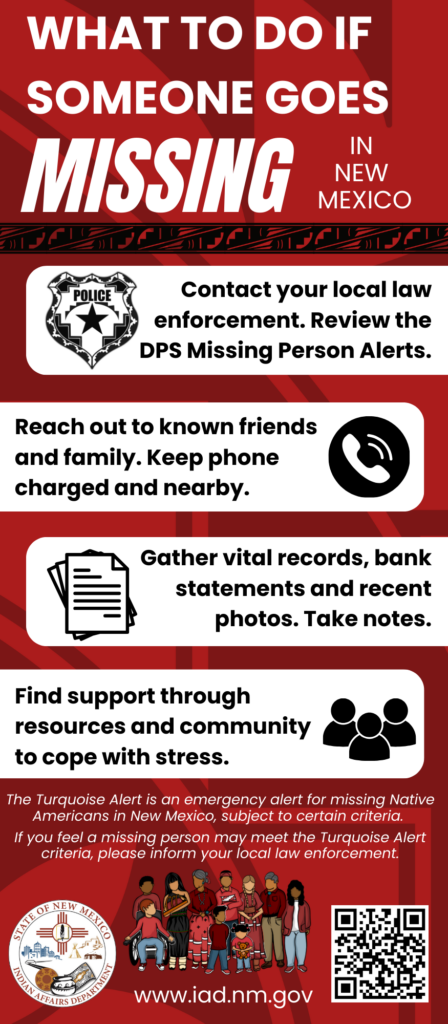
Resources
State Response Plan Tables
Timeline: ST= Short Term 1-2 years | MT= Mid-term 2-3 years | LT= Long-term over 3 years
Priority: P=Primary | S= Secondary
Barriers: A= Lacks statutory authority | D= Limited access to reliable and relevant data | K= Limited Knowledge of Best Practices | IT= Technology | P= Personnel | PD= Cross-sector Professional Development | PW= Political Will | J= Jurisdictional Inconsistencies | R= Lack of resources for personnel, equipment, travel | S= Systemic barriers (discriminatory) | LC= Language barrier
Benefits: A= Strengthens Public Awareness | B= Builds Systems Capacity | CC= Cross-system Coordination | CR= Culturally Responsive | E= Advances Equity | LR= Linguistically Responsive | PH= Improves Public Health | P= Strengthens Prevention | PSTrans= Improves Public Safety | PT= Public Trust is Increased | RJ= Restorative Justice | TI=Advances a Trauma-Informed Response
Government Action: A=Lacks statutory authority | D= Limited access to reliable and relevant data | K= Limited Knowledge of Best Practices | IT=Technology
Support Services for Survivors and Families (p. 24)
| Strategies | Timeline | Priority | Barriers | Benefits | Government Action? | Our Plan |
|---|---|---|---|---|---|---|
| 1a. Establish secure and confidential shelters within Tribal communities and border towns for individuals, families, and youth in crisis | MT | S | P, PD, R | B, CR, E, LR, PH, TI | Y-County, Y-Tribal, Y- Grassroots, Y- Victim's Rights, Y-Indigenous Specific, Y-LGBTQ/Two Spirit | |
| 1b. Expand support services to include housing support, mental health, substance abuse and trafficking aftercare (e.g., The Life Link in Santa Fe). | ST | P | R, P, PD, D | All | All Gov, all Comm | |
| 1c. Provide more victim-centered resources and availability of victim advocates and/or a family liaison. | ST | P | P, R, J, PD | A, B, CC, TI, PH, CR | Y – County, Tribal; Y-All Comm | |
| 1d. Increase state and local funding to provide resources and programs that can support survivors and families. | ST | P | D, A, lack of accountability for federal trust responsibilities. | All | Y – All Gov; Y – All Comm | |
| 1e. Inclusive service programs such as healthcare, behavioral health, IHS, first responders, service programs HHS (First Nations) need to include community members from youth, 2SLGBTQ+ (Two-Spirit, Lesbian, Gay, Bisexual, Transgender, Queer, Plus), and rural locations. | ST | P | K, R, D (tribal), PD, lack of community education | All | All Gov, all Comm | |
| 1f. Strengthen services provided for long-and short term housing to improve crisis response and increase access to mental health and substance abuse treatment. | ST, LT | P | K, PD, P, R | CC, CR, PH, P, TI | Y – Tribal and County with federal support. Y- Healthcare/MH, LGBTQIA |
Develop Community Outreach, Education, and Prevention Strategies (p. 33)
| Strategies | Timeline | Priority | Barriers | Benefits | Government Action? | Our Plan |
|---|---|---|---|---|---|---|
| 2a. Develop career pathways for Native youth for careers within tribal communities, including pathways in social and behavioral services, trade, social justice, criminal justice, education, agriculture, medical, and rehabilitation programs to expand the workforce in tribal and neighboring communities. | LT | S | D, R (monetary), S | A, B, CC, CR, E, LR, PH, P, PS, PT, RJ, TI | Y-Tribal, State, Federal | |
| 2b. Expand youth programs and community education to raise awareness and prevention of sexual violence and domestic violence. | ST | P | PW, K, S, P, J, R, LC | A, B, CR, LR, E, P, PS, PH, PT, TI, RJ | Y-Tribal, Federal, State, County, Municipal, Grassroots, Victim's Rights, Healthcare, Indigenous specific, LGBTQ/two-spirit | |
| 2c. To create and expand culturally-relevant curriculum on healthy relationships and violence prevention. Develop education, outreach, and training for and from impacted community members to identify and respond to signs of human trafficking and domestic violence. | LT | P | PW, K, S, P, J | A, B, CR, LR, E, P, PS, PH, PT, TI, RJ | Y-Tribal, Federal, State, County, Municipal, Grassroots, Victim's Rights, Healthcare, Indigenous specific, LGBTQ/two-spirit | |
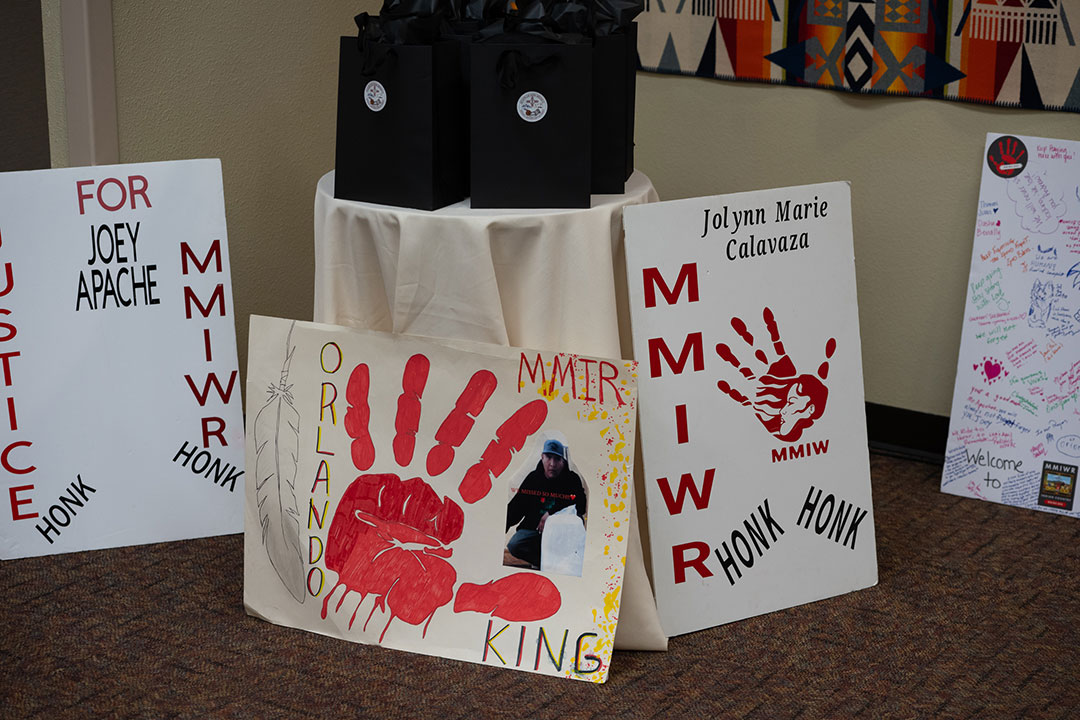
| 2d. Raise awareness of MMIWR through the creation of a resource guide and repository with informational materials and media campaigns that can be posted in public places and businesses. | ST | S | P, R, D, S | A, CR, E, P, PS, TI, CC | Y-State, Grassroots, Victim's Rights, Healthcare, Indigenous specific, LGBTQ/two-spirit | |
| 2e. Secure updated equipment for investigations and crime scene documentation. | MT | P | IT, P, K, J, R | B, PS, PT | Y-Tribal, Federal, State, County, Municipal | |
| 2f. Secure and implement training for standardized state- and tribal-wide investigations and crime scene documentation. | LT | P | IT, P, K, J, R, S | B, CR, PS, PT, TI | Y-Tribal, Federal, State, County, Municipal, Grassroots, Victim's Rights, Healthcare, Indigenous specific, LGBTQ/two-spirit | |
| 2g.1) Revise training standards for NM Law Enforcement in collaboration with the MMIWR Task Force and the NMAG Human Trafficking Task Force. 2g. 2) Establish a cross-sector statewide training bureau around MMIWR and related issues to strengthen victims' services. | LT | P | PW, S, A, P, PD, J, R, D, K | A, B, CC, CR, E, LR, PH, P, PS, PT, RJ, TI | Y-Tribal, State, County, Municipal, Grassroots, Victim's Rights, Healthcare, Indigenous specific, LGBTQ/two-spirit |
Develop Community Resources for Strong Responses (p. 48)
| Strategies | Timeline | Priority | Barriers | Benefits | Government Action? | Our Plan |
|---|---|---|---|---|---|---|
| 3a. Identify trusted community members who can be trained to serve as facilitators for grief and loss support groups and connect to existing grief and loss supports. (Training orgs and resource data base., i.e DOJ VAWA) | ST | P | K, IT, PD, P, PW, R, S, LC | A, B, CC, CR, E, LR, PH, P, PS, PT, RJ | All | |
| 3b. Educate youth pre-k-12 about MMIWR, emphasizing prevention. (Related to 2b) | MT | P | A, PW, K, S, P, J, R | A, B, CC, CR, E, LR, PH, P, PS, PT, RJ, TI | School boards, State, Tribal, Federal, Healthcare/Mental Health, Human Services | |
| 3c. Develop Multi-Disciplinary Teams (MDTs) within tribal communities to spread awareness about MMIWR, focused on prevention. | LT | P | A, K, IT, P, PD, PW, R, S, LC | A, B, CC, CR, E, LR, PH, P, PS, PT, RJ, TI | Tribal, Federal, State, Indigenous specific community partners- grassroots, health, mental health, human service, LGBT/Two Spirit, victim's rights | |
| 3d. Create a strong intergenerational community (prevention) response, including youth prevention and education programs that are based in culture and healthy relationships. | MT | P | K, IT, P, PD, PW, LC, S, R | A, B, CC, CR, E, LR, PH, P, PS, PT, RJ, TI | Tribal, County, Municipality, Federal-$, Community-based- All Community Groups | |
| 3e. Provide healing options with different modalities for survivors and reentry programs to ensure reintegration and a healing journey. | MT/LT | P | R, PW, PD, K, S, AH, LC | A, B, CC, CR, E, LR, PH, P, PS, PT, RJ, TI | All Actors | |
| 3f. Develop community aid and response to check on vulnerable people (youth, people with disabilities and elders) during pandemic isolation. | ST | P | A, D, P, PW, R, J, AH, S | A, B, CC, CR, E, LR, PH, P, PS, PT, RJ, TI | Call to community groups | |
| 3g. Identify funding for each school (state and BIE) to support existing resources and to require the establishment of LGBTQ Two Spirit student groups. (Build from PFLAG and Gay Straight Alliance, etc. Model) | MT | P | A, P, PW, R, S, PD, K | A, B, CC, CR, E, LR, PH, P, PS, PT, RJ | State, Federal, Tribal-$, Community- grassroots, LGBT/Two Spirit |
Build Capacity Within Systems to Meet the Needs of MMIP (p. 61)
| Strategies | Timeline | Priority | Barriers | Benefits | Government Action? | Our Plan |
|---|---|---|---|---|---|---|
| 4a. Seek and secure funding for capacity building to respond to MMIWR cases. | MT | P | P, K, R, J, S | B, CC, CR, E, LR, PS, TI | Y-Tribal, Y-Federal, Y-Victim's Rights, Y-Indigenous Specific | |
| 4b. Seek and secure funding for tribal court safety, equipment, and technology. | MT | P | P, K, R, J, IT, S | B, PS, CC, PT | Y-State, Tribal | |
| 4c. Support legal reform in tribal communities to prohibit human trafficking. | LT | S | P, R, PW, D | B, CC, PS, P, PT | Y-Tribal, Federal, Victim's Rights, Healthcare/Mental Health/Human Services | |
| 4d. Advocate and secure funding for additional Special Assistant United States Attorney (SAUSA) positions and resources to tribal courts. | LT | P | R | P, CC, B, PT | Y-Tribal, Federal, Victim's Rights | |
| 4e. Establish liaison positions, task forces, and opportunities to discuss and improve coordination and collaboration between tribal, state, city, county and federal agencies. | MT | S | PW, P, R | B, CC, PT | All Government |
Identified Law Enforcement Recommendations (p. 71)
| Strategies | Timeline | Priority | Barriers | Benefits | Government Action? | Our Plan |
|---|---|---|---|---|---|---|
| 5a. Create Memorandums of Understanding between tribal law enforcement agencies and state/county/city agencies to facilitate information sharing, resource sharing, investigations, enforcement, or other creative partnerships to strengthen the response to MMIWR cases. | MT | S | R, PW, K, PD | A, B, CC, PS, PT | Y-Tribal, State, Federal, Municipal, County | |
| 5b. The Department of Public Safety must identify solutions to improve and increase commissioning agreements in collaboration with tribal leadership. | MT | P | PW, R, J, PD | A, B, CC, PS, PT | Y-Tribal, State, County | |
| 5c. Establish a permanent MMIWR office with a standing cold case review team. | MT | P | R, P, J, A, K | B, A, CC, PS, PT, P | All Govt; All community | |
| 5d. Create and pass legislation mandating training focused on MMIWR and improving reporting by all public safety personnel across the state. | MT | P | P, K, R | B, CC, PS | Y-State, Federal, Municipal, County, Victim's Rights | |
| 5e. Support all New Mexico tribes' participation in the 2013 VAWA. | LT | P | IT, P, PD, PW, R | B, P, PH, PS, PT, RJ | Y-Federal, State, Tribal, Victim's Rights | |
| 5f. Streamline the process to commission state police officers with the Special Law Enforcement Commission (SLEC). | LT | S | P, PD, R, J | B, CC, PS | Y-State, Federal, Tribal | |
| 5g. Establish a mandatory protection order sharing between tribes and New Mexico Law Enforcement officers via NCIC. (Pro) | MT | P | P, R, K | A, B, CC, CR, E, LR, PH, P, PS, PT, RJ, TI | Y-State, Federal, Tribal, Victim's Rights, Indigenous specific, LBTQ/2S |
Develop Standards and Capacity for Data to be Reported and Documented Accurately (p. 83)
| Strategies | Timeline | Priority | Barriers | Benefits | Government Action? | Our Plan |
|---|---|---|---|---|---|---|
| 6a. Support increased data-gathering capacity across law enforcement agencies (LEAs) to increase accountability and ability to understand frequency, type and location of crimes. | ST | P | D, K, IT, P, PD, J, R, PW | B, CC, PS, PT, RJ | Government Action: Y-State, Y-Tribal, Y-Federal, Y-Municipal agreement; Community Action: Y | |
| 6b. Increase capacity for the State to consistently report missing persons cases to NamUs as required by House Bill 16 (2019) within 30 days. | ST | P | IT, P, PD, J, R | A, CC, CR, PH, PS, TI, PT | Government Action: Y-State, Y-Federal, Y-Tribal; Community Action: N | |
| 6c. Include tribal affiliation when documenting missing persons, trafficking, and cases of homicide to improve data gathering and policy development. | ST | S | K, IT, P, PD, J, R | A, B, CC, CR, E, PH, PS, PT, RJ | Government Action: Y-M, C, F, T; Community Action: Y-GR, Y-VR, Y-H/MH/HS, Y-IS, Y-LGBTQ | |
| 6d. Enact federal legislation requiring NCIC to track tribal affiliation and ethnicity data in the missing persons reporting forms. | MT | P | PW, D, K, R, J | TI, RJ, PT, E, A, PH, P | Government Action: Y-M, S, C, F, T; Community Action: Y-GR, Y-VR, Y-H/MH/HS, Y-LGBTQ2+ | |
| 6e. Initiate in-depth data collection by examining case files to help document gaps in the investigation and prosecution processes. | MT | P | D, K, IT, P, PD, PW | TI, P, A, E | Government Action: Y-M, S, C, F, T; Community Action: Y-VR, Y-H/MH/HS, Y-IS | |
| 6f. Work with Tribal governments to pass laws and policies that require reporting of all missing persons cases to the National Crime Information Center and State Missing Persons Clearinghouse. | LT | P | K, IT, P, PD, R, PW, J | TI, PT, RJ | Government Action: Y-Tribal; Community Action: Y-Grassroots, Y-Healthcare/Mental Health | |
| 6g. Establish a data institute to track and study cases of Missing and Murdered Indigenous Women, Girls, Trans/2S+ and LGBQ community members as well as boys and men that also documents tribal-specific data. | LT | P | D, R, IT, P, PD, K, PW | B, PH, CC, E, P, PS, PT | Government Action: Y-S, F, T, M |
MMIP Advisory Council
To Be Announced!
Past MMIP Advisory Council Members
- Melody Delmar, Interim Board Chair, New Mexico Indian Affairs Department
- Suzanne Skasik, Department of Public Safety, Captain/Special Investigations Unit
- Henry Kaulaity, Special Agent, Bureau of Indian Affairs – Office of Justice Services
- Jana Pfefiffer, New Mexico Office of the Attorney General
- Delilah Tenorio, New Mexico Office of the Attorney General
- Richelle Montoya, Navajo Nation Vice President
- Jasmin Blackwater Nygren, Navajo Nation First Lady
- John Tsosie, Executive Assistant to the Navajo Nation President
- James Maiorano, New Mexico Sheriff's Association
- Deputy Chief Taft Tracy, Farmington Police Department
- Sergeant Andrea Tsosie, Gallup Police Department
- Andrea Romero, New Mexico Representative
- Linda Lopez, New Mexico Senator
- Mila Reinikainen, Sandia Pueblo Behavioral Health
- Pretty Water Duran, ICWA Manager San Ildefonso Pueblo
- Koy Perea, Jicarilla Apache Nation
- Ardena Orosco, Mescalero Apache Tribe
- Anthony Mendez, Mescalero Apache Tribe
- Rita Capitan, Navajo Nation Crownpoint Chapter Representative
- Amber Crotty, Navajo Nation Council Delegate
- Kelly Gilbreth, Crossroads for Women/Americans for Indian Opportunity
- Nicole Webb, UNM Hospital Trauma Nurse
- Michelle Pent, Local physician specializing in public health and addiction
- Darlene Gomez, Legal advocate
- MaryEllen Garcia, NM Crime Victim Reparation Commission
- Meskee Yatsayte, Missing and Murdered Diné Relatives
- Jennifer Denetdale, Navajo Nation Human Right Commission
- Celina Montoya-Garcia, Coalition to Stop Violence Against Native Women
- Nolan J. Hall, Indigenous Youth Representative
- Mattee Jim, HIV Prevention Coordinator, First Nations Community Healthsource
- Reycita Billie, Navajo Nation Tribal Dispatcher
- Chuck Weaver, Santa Ana Pueblo Criminal Investigator
- Chastity Sandoval, Nambe Pueblo Victim Legal Advocate
- Kyle Hartsock, Albuquerque Police Department
- Tracy J Madrid, Indigenous survivors of violence or family members of an Indigenous relative who has been a victim of violence
- Petra Solimon, Indigenous survivors of violence or family members of an Indigenous relative who has been a victim of violence
- Becky Johnson, Indigenous survivors of violence or family member of an Indigenous relative who has been a victim of violence